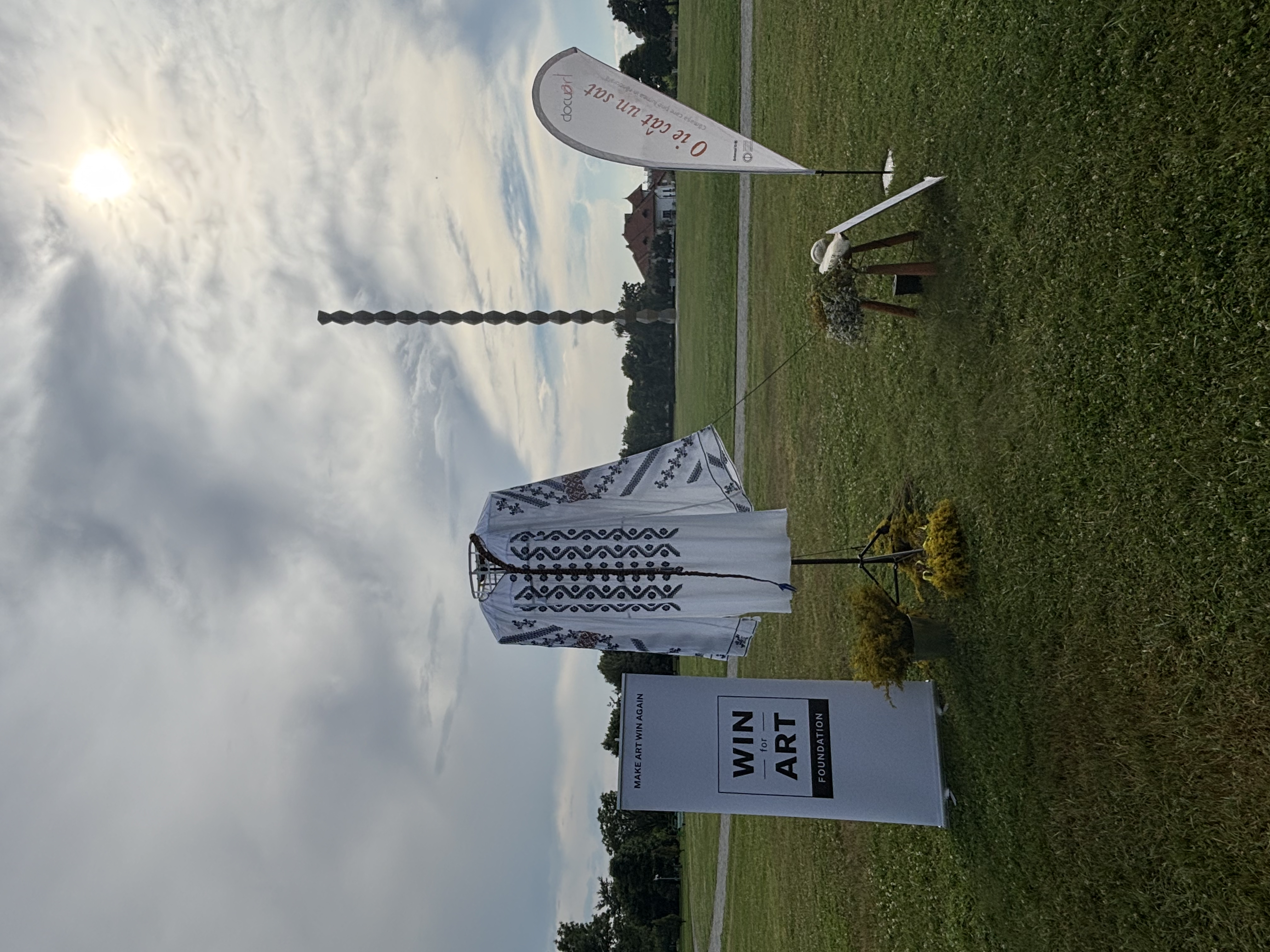
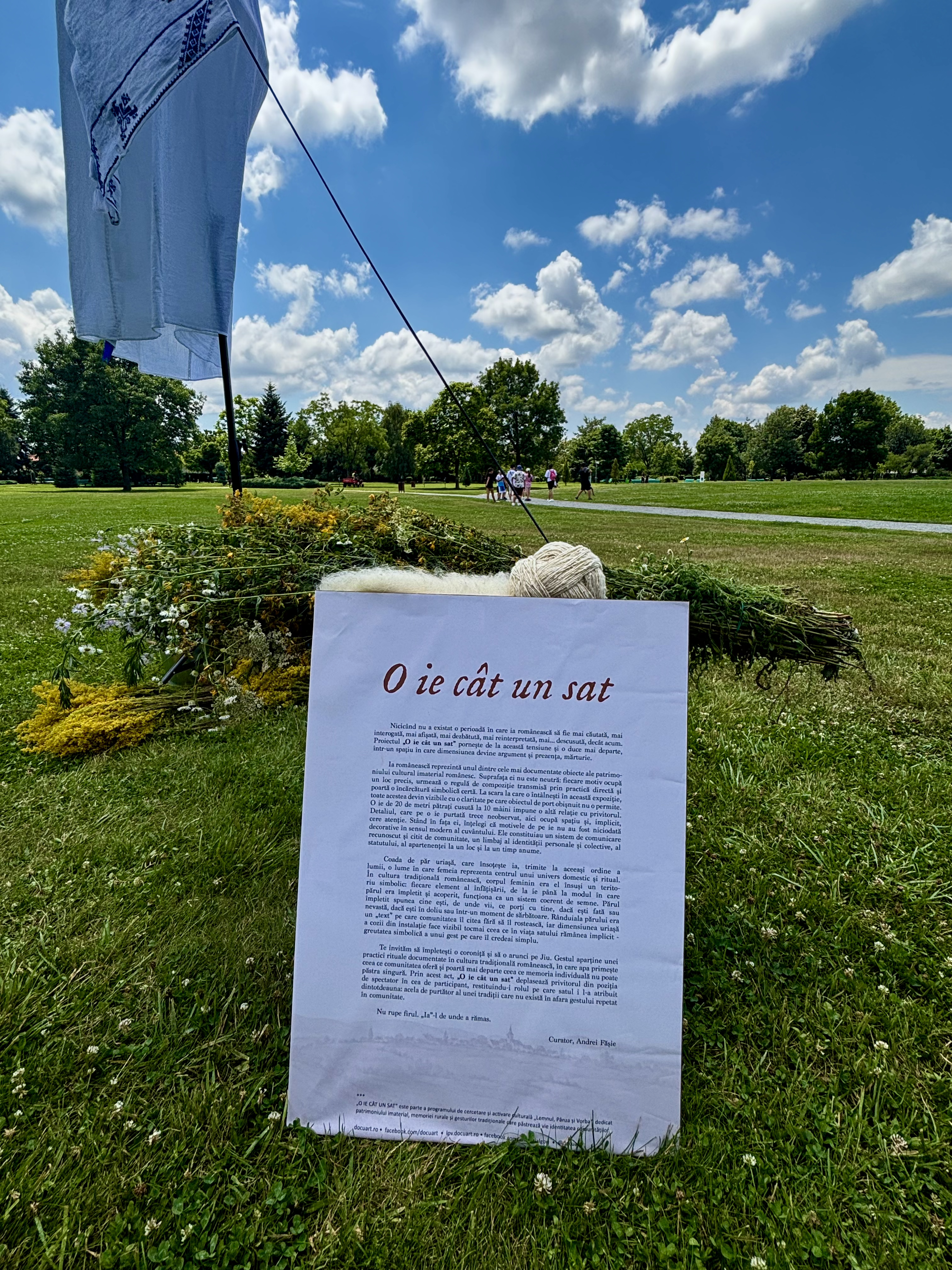
We don't realize how fast heritage deteriorates and disappears. Lately, there has been a greater amount of coverage on these issues, both on TV and online — a welcome and necessary development, which in the future should be matched by more hands-on events aimed at the public, similar to those organized by Docuart.
Whether we are talking about movable heritage or immovable heritage, both types are prone to neglect — on one hand due to a lack of funding, and on the other due to a lack of regulations, as well as a lack of rigorous, proactive rather than reactive organization.
Most of the time, we only step in once a building is on the verge of collapse or a heritage object has already reached an advanced state of decay, even though the warning signs were visible long before. This last-minute reaction — costly and often ineffective — could be avoided through constant monitoring, an updated mapping of the condition of heritage buildings and objects, and legal mechanisms that penalize negligence by owners, whether private individuals or state institutions.
Lack of heritage education also plays an essential role in this silent disappearance. Many of us walk past historic buildings, wooden churches or monuments every day without perceiving their true value, without understanding the story they carry and, as a result, without feeling the need to protect them. Heritage education should begin at an early age, in schools, through organized visits, interactive projects and partnerships with organizations like Docuart, which manage to turn dry information into memorable experiences.
Last but not least, the local community must be actively involved in the conservation process. Heritage does not belong only to the state or to specialists, but to everyone who lives near it. When people feel that a historical monument is part of their identity, they become its first defenders — reporting damage, opposing abusive demolitions and supporting restoration initiatives. Without this emotional connection and sense of belonging, any institutional effort remains incomplete, and heritage will continue to fade away, slowly and silently, before our indifferent eyes.