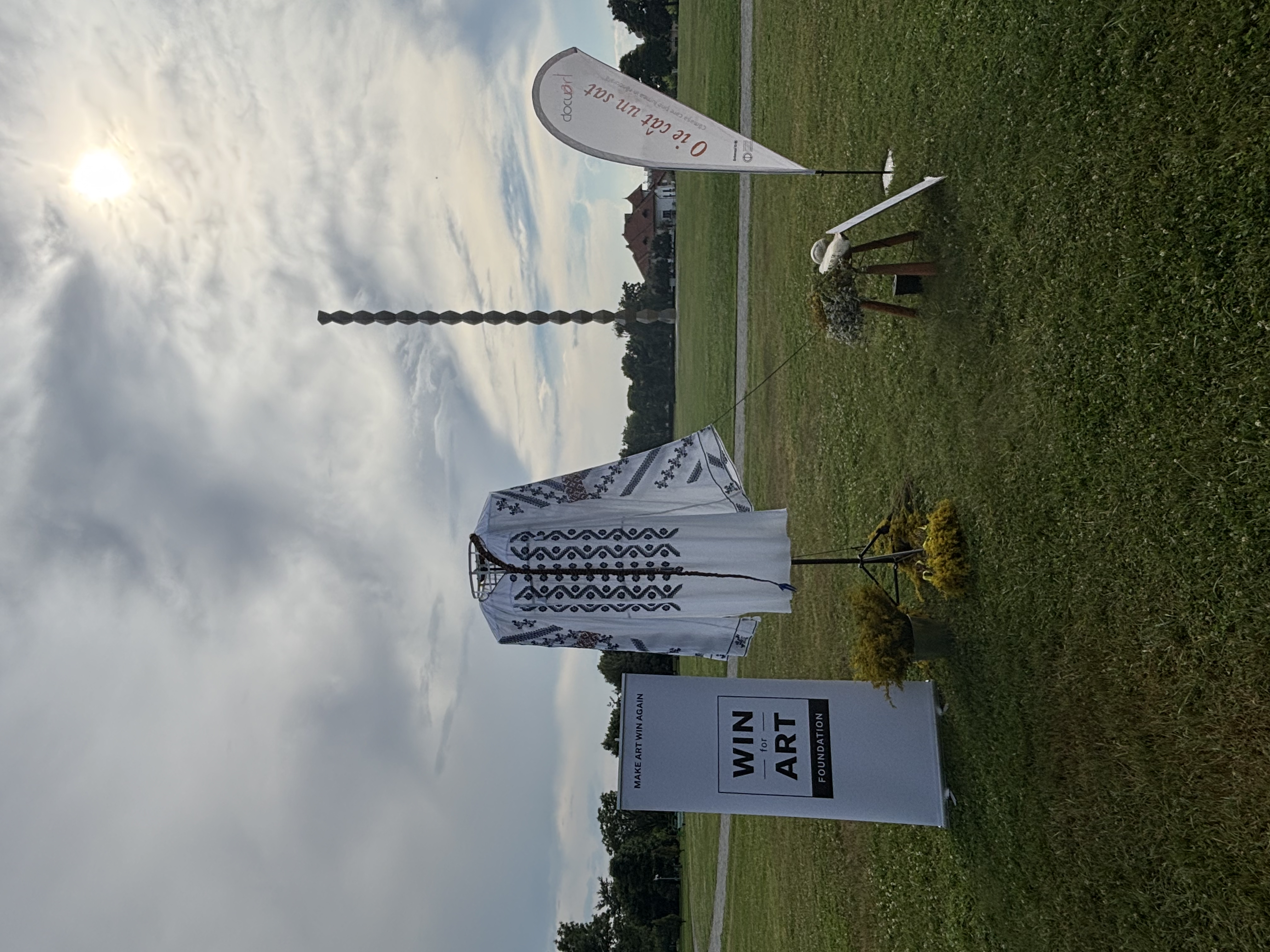
„O ie cât un sat”, a project that magnifies the Romanian blouse

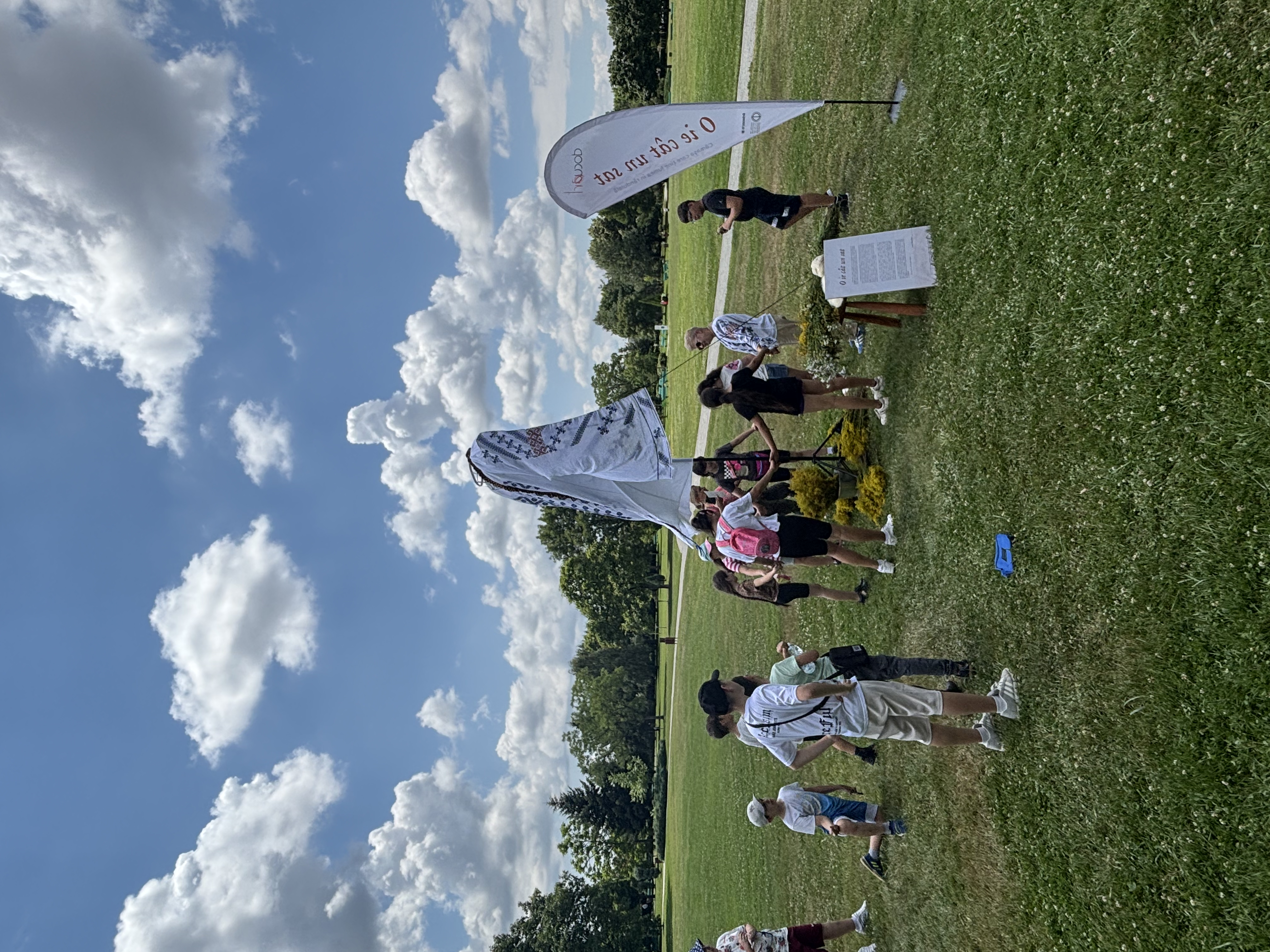
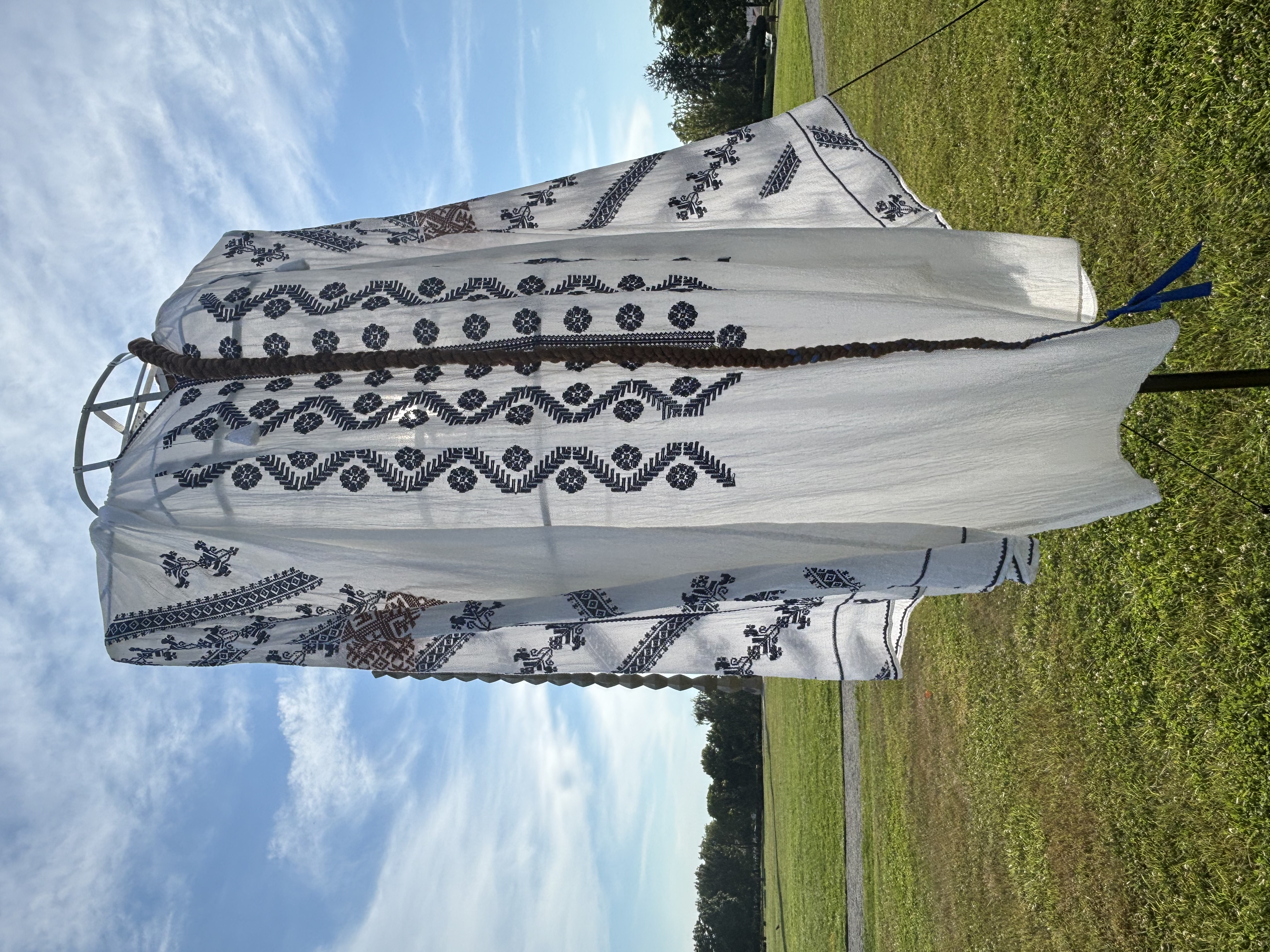
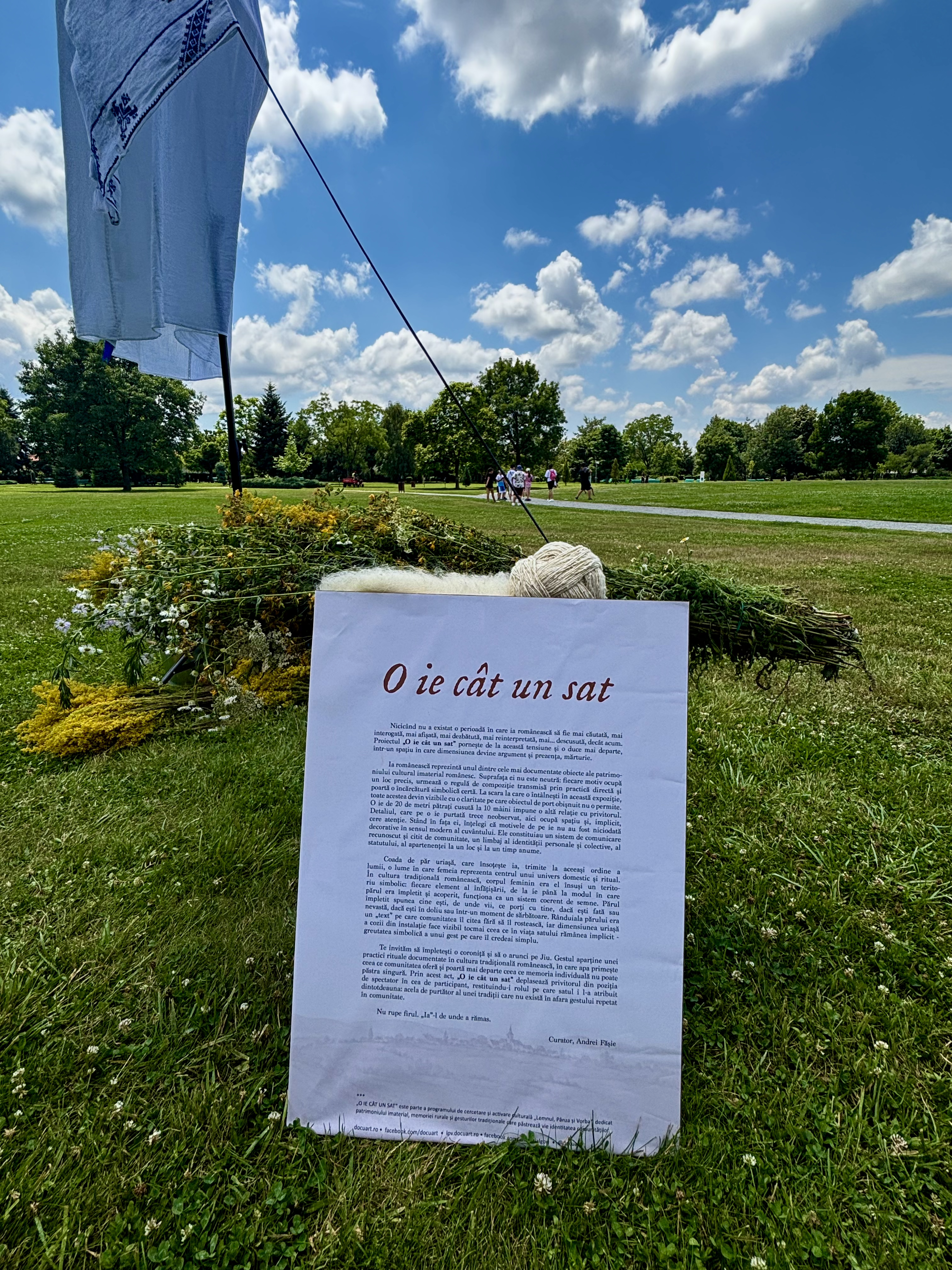
Docuart launched, in Târgu-Jiu, on June 24, 2026, the largest ie (traditional Romanian blouse) ever made, the installation through which it was presented to the public also including a braided hair tail to match. The ie measures 20 square meters, and the hair tail is almost two and a half meters long, and includes coins and ribbons, both components of the installation complementing each other by speaking to identity elements specific to women's attire of the archaic Romanian village.

This project continues the series previously opened by the exhibition "Wood, Cloth and Word", and aims to bring to the public's attention themes related to material and immaterial heritage through a visual paradox: the extremely large ie has the ability to enlarge its symbolic elements specific to Gorj, as if placed under a magnifying glass, so that anyone can look closely at the symbols, much more easily. At the same time, the Docuart event is also an elegant manifesto in favor of traditional values that must not only be preserved, but also carried forward today in forms attractive to today's generations. Through this event, we understood the importance of relating correctly to the past, and especially the importance of observing these deep roots through a lens that allows both understanding them in the context they come from, and in the current context, which also takes into account their consequences and historical evolution.

IMG_1031 IMG_1031

The Partnership with WIN for ART Foundation


The WIN for ART Foundation chose to join this project as a partner because it supports initiatives that showcase heritage elements and contribute to promoting them through innovative methods and different perspectives. This is a direction actively pursued by the foundation, and it fits within the strategic directions through public education and training, as well as through strengthening the artistic community, intercultural dialogue and, of course, supporting and promoting artistic creation.

At the same time, the event also had a research dimension, the ie having been created following an in-depth study of approximately 200 ie blouses from the heritage collection of the Curtișoara Museum, from which the traditional symbols that formed the final design of the ie were "gathered". Moreover, also on June 24, an international university conference titled "Identity, Tradition and Cultural Interferences. Symbolism of the Romanian Blouse “Ia”" was held at "Constantin Brâncuși" University in Târgu-Jiu, where several scientific paper sessions were presented, to be followed by the publication of the papers in a collective volume.

The two parts of this event provide a healthy, lasting foundation, capable of generating — at the local community level and later, through other targeted events promoting this installation — the curiosity needed to develop people's appetite for culture.

IMG_1005 IMG_1005

WIN for ART inside the „Constantin Brâncuși” University in Târgu-Jiu

Heritage Does Not Disappear in Silence, But It Disappears Unnoticed

We don't realize how fast heritage deteriorates and disappears. Lately, there has been a greater amount of coverage on these issues, both on TV and online — a welcome and necessary development, which in the future should be matched by more hands-on events aimed at the public, similar to those organized by Docuart.

Whether we are talking about movable heritage or immovable heritage, both types are prone to neglect — on one hand due to a lack of funding, and on the other due to a lack of regulations, as well as a lack of rigorous, proactive rather than reactive organization.

Most of the time, we only step in once a building is on the verge of collapse or a heritage object has already reached an advanced state of decay, even though the warning signs were visible long before. This last-minute reaction — costly and often ineffective — could be avoided through constant monitoring, an updated mapping of the condition of heritage buildings and objects, and legal mechanisms that penalize negligence by owners, whether private individuals or state institutions.

Lack of heritage education also plays an essential role in this silent disappearance. Many of us walk past historic buildings, wooden churches or monuments every day without perceiving their true value, without understanding the story they carry and, as a result, without feeling the need to protect them. Heritage education should begin at an early age, in schools, through organized visits, interactive projects and partnerships with organizations like Docuart, which manage to turn dry information into memorable experiences.

Last but not least, the local community must be actively involved in the conservation process. Heritage does not belong only to the state or to specialists, but to everyone who lives near it. When people feel that a historical monument is part of their identity, they become its first defenders — reporting damage, opposing abusive demolitions and supporting restoration initiatives. Without this emotional connection and sense of belonging, any institutional effort remains incomplete, and heritage will continue to fade away, slowly and silently, before our indifferent eyes.


 

IMG_1067 IMG_1067
The Gigantic Romanian Blouse „Ia”
IMG_1032 IMG_1032
Children doing a traditional „hora” dance around the ia
IMG_1070 IMG_1070
The Gigantic Ia and the Braided Hair
IMG_1041 IMG_1041
Panelling Details

Head of Artistic and Curatorial Programs​,
Andrei Fășie